Bilingual by Design: Running a Clinic in Two Languages and Two Directions
Software that merely translates its labels is not bilingual. What actually has to change when an interface serves both right-to-left and left-to-right users, why mixed numbers and dates break, and what to test before committing.
Translation is the smallest part
Many systems claim bilingual support and mean the labels have been translated. For a clinic serving patients in Arabic and English — often in the same afternoon — that is roughly the first ten percent of the work.
The rest is that the entire interface has to mirror. Navigation moves to the other side, tables read from the other edge, icons that imply direction have to flip, and anything positioned by hand rather than by the layout system ends up in the wrong place.
Where it typically breaks
- Mixed-direction text. An Arabic sentence containing a Latin drug name, or an English note containing an Arabic patient name. These render correctly only if the surrounding markup is right.
- Signed and technical numbers. A negative value, a range, a measurement with units — these can visually reorder in a right-to-left context and end up displaying as something other than what was entered. In a clinical field that is a genuine safety concern, not a cosmetic one, and it is why numeric fields need to be explicitly pinned to left-to-right even inside a right-to-left page.
- Dates. Format, calendar and which end the day sits on all vary.
- Printed output. Prescriptions, receipts and reports are frequently built once, in one direction, and never checked in the other.
- Patient-facing pages specifically. A practice can tolerate a slightly awkward admin screen. A booking page that reads wrong loses patients.
Two directions, not two products
The distinction that matters when evaluating: is the second language a translation layer over a system built for the first, or does the system genuinely treat both as first-class? The tell is usually in the less-visited screens — reports, settings, printed documents — where a translation layer runs out.
What to test before committing
Ask for a trial and do these in both languages: 1. Book an appointment as a patient, on a phone. 2. Write a clinical note containing a drug name in the other language. 3. Enter a negative or ranged numeric value and check it displays as entered. 4. Print or export a receipt and a prescription. 5. Open the reporting screens.
If items 3, 4 and 5 hold up, the system is genuinely bilingual. Most of the failures live there.
Where Roshtah stands
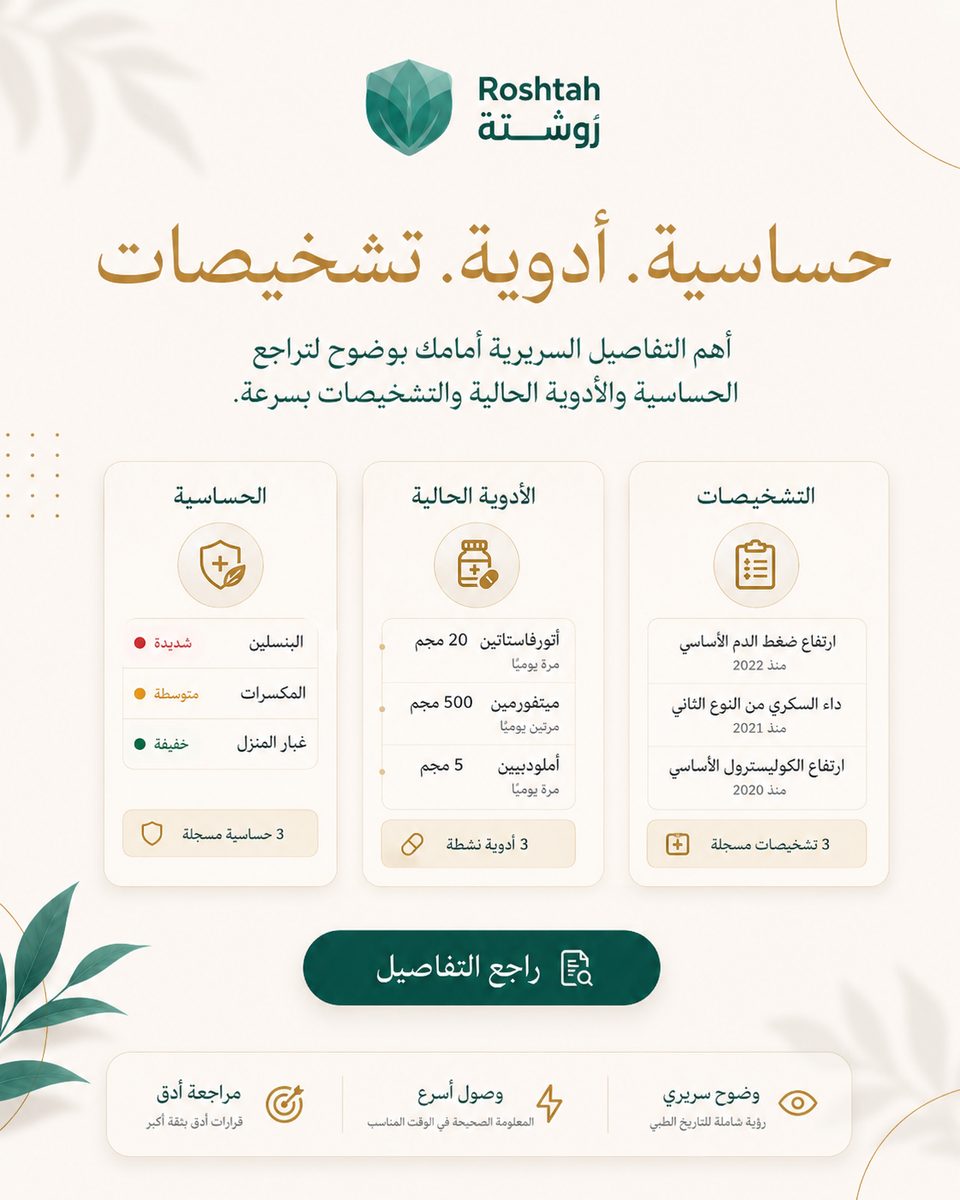
Arabic and English are both first-class, with Turkish available, and the interface mirrors rather than translating in place — including the patient-facing booking page and printed documents. Numeric fields in clinical records are explicitly direction-pinned so a signed value reads as entered regardless of the surrounding language. Language is a per-user choice, so a practice can run in one language while an individual clinician or patient uses another.
Roshtah multi-doctor clinic tour — branches, shifts and per-doctor pricing

Try Roshtah today
Doctors, clinics, appointment booking and online medical consultations in Syria — all in one place.